

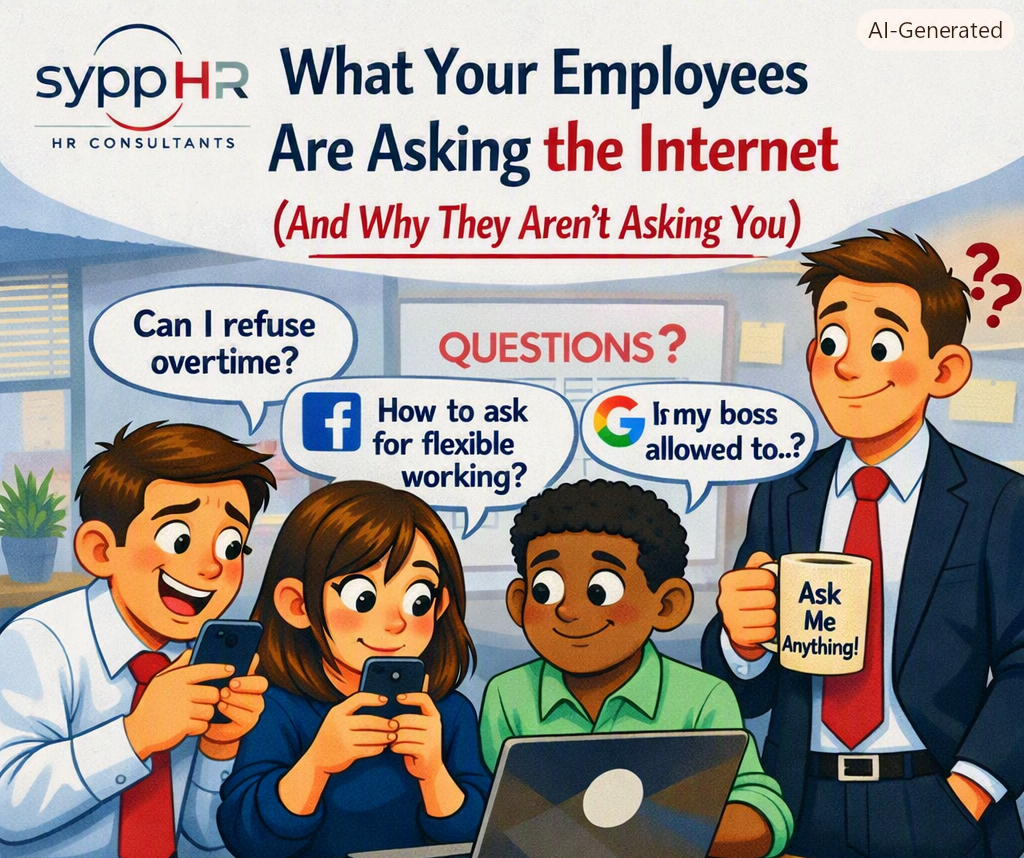
If you want to know what is keeping your workforce up at night, you don’t need an expensive engagement survey. You just need to look at where employees actually go when they are confused, anxious, or frustrated: online forums and social media.
Across UK employee communities, a clear picture emerges of the HR and operational questions workers are seeking answers to. Rather than addressing these concerns internally, they are turning to strangers on the internet for a reality check.
The Burning Questions Employees Are Asking Online
Here are the topics dominating public forums right now, along with the real-world dilemmas driving them:
- Sickness Absence & Attendance Triggers
- The Example: An employee hits a company threshold of three separate illness absences in six months—backed by doctor notes—and receives a formal attendance warning. They log online to ask: “Can they punish me for genuinely being sick?”
- Flexible Working & Hybrid Rights
- The Example: A worker submits a formal flexible working request, but weeks pass with no formal written response, only a vague verbal brush-off from their manager. They ask: “Has my employer breached the statutory rules, and what do I do next?”
- PIPs and the “Two-Year Rule”
- The Example: An employee with 18 months of service is suddenly placed on a Performance Improvement Plan out of nowhere. They ask: “Do I have any protection, or is this just a box-ticking exercise before they fire me before my two-year mark?”
- Redundancy vs. Restructuring
- The Example: A business announces a “role reorganisation” that feels suspiciously like downsizing, bypassing standard consultation periods. Employees ask: “Are they dodging their legal redundancy obligations?”
- Grievances and Internal Bias
- The Example: Someone raises a formal bullying complaint against a manager, only to find the internal investigator is a close colleague of the accused. They ask: “How can I trust an internal process that feels entirely stacked?”
Why the Internet Instead of You?
When employees bypass their internal channels to crowdsource legal and HR advice, it rarely points to a simple curiosity about policy. In smaller businesses, where every relationship is close-knit and dedicated support systems don’t exist, this behavior is driven by distinct structural and cultural hurdles:
- 1. Unapproachable Management: Staff often feel that raising concerns directly with their managers carries professional risk. The fear is that asking questions or raising an issue might lead to them being perceived as difficult or disruptive, potentially triggering unwanted consequences for their standing in the company.
- 2. A Lack of Easily Accessible Information: In larger organisations, internal intranets and HR self-service portals mean policies and procedures are readily available at the click of a button. In contrast, smaller businesses often require staff to explicitly request copies of policies from management or leadership. For an employee, making that direct request can feel intimidating, acting as a barrier to finding simple answers.
- 3. Nowhere Else to Go: In smaller businesses, there is typically no independent HR staff, employee representation, or neutral third party to turn to when someone is confused about a workplace situation. If an employee feels unable to approach managers, cannot easily access internal guidance, and has no internal alternatives, they are left with no choice but to look outside the organisation.
As a result, more and more people are turning to social media platforms. There, they find an enormous community of people eager to offer advice—though that external guidance is frequently just as likely to be inaccurate or misleading as it is to provide genuinely helpful clarity.
How to Overcome This and Bring Conversations In-House
If your team is looking outward for answers, it’s a symptom that your internal communication channels need strengthening. To build a culture where employees feel safe bringing questions directly to you, consider these steps:
1. Demystify Policies Before They Become Problems
Don’t hide your policies in a dense handbook or make staff ask for them. Proactively make information accessible by storing standard procedures in a shared, easy-to-reach digital folder. Publish clear, plain-English guides on common friction points—like how sickness triggers work, what the flexible working request process actually looks like, or how performance reviews feed into development. When the rules of the game are transparent and effortless to find, anxiety plummets.
2. Create Low-Stakes Communication Pathways
Without an internal HR team, ambiguity thrives. Create a structured, predictable way for staff to ask questions without feeling like they are stepping on toes or drawing unwanted attention. Make it clear through your actions and communication that inquiring about policy or statutory rights is a normal, healthy part of employment, not a challenge to authority.
3. Build Safe, Accessible Feedback Loops
Often, employees ask the internet because they are terrified of individual confrontation. Create safe spaces—such as regular check-ins, open feedback sessions, or anonymous suggestion channels—where concerns can be raised broadly. By removing the fear of being labeled “difficult,” you close the information gap that otherwise drives employees straight to public forums looking for answers.
Get in Touch
Managing people while trying to run and grow a business is a delicate balancing act, and you shouldn’t have to navigate employment law, policy design, and employee relations entirely on your own.
If you feel that having cost-effective access to expert HR support in your business might help you foster a more engaged, confident, and effective workforce who truly understand your business and culture, get in touch today to discover how flexible, professional HR guidance can protect your business and empower your people.