

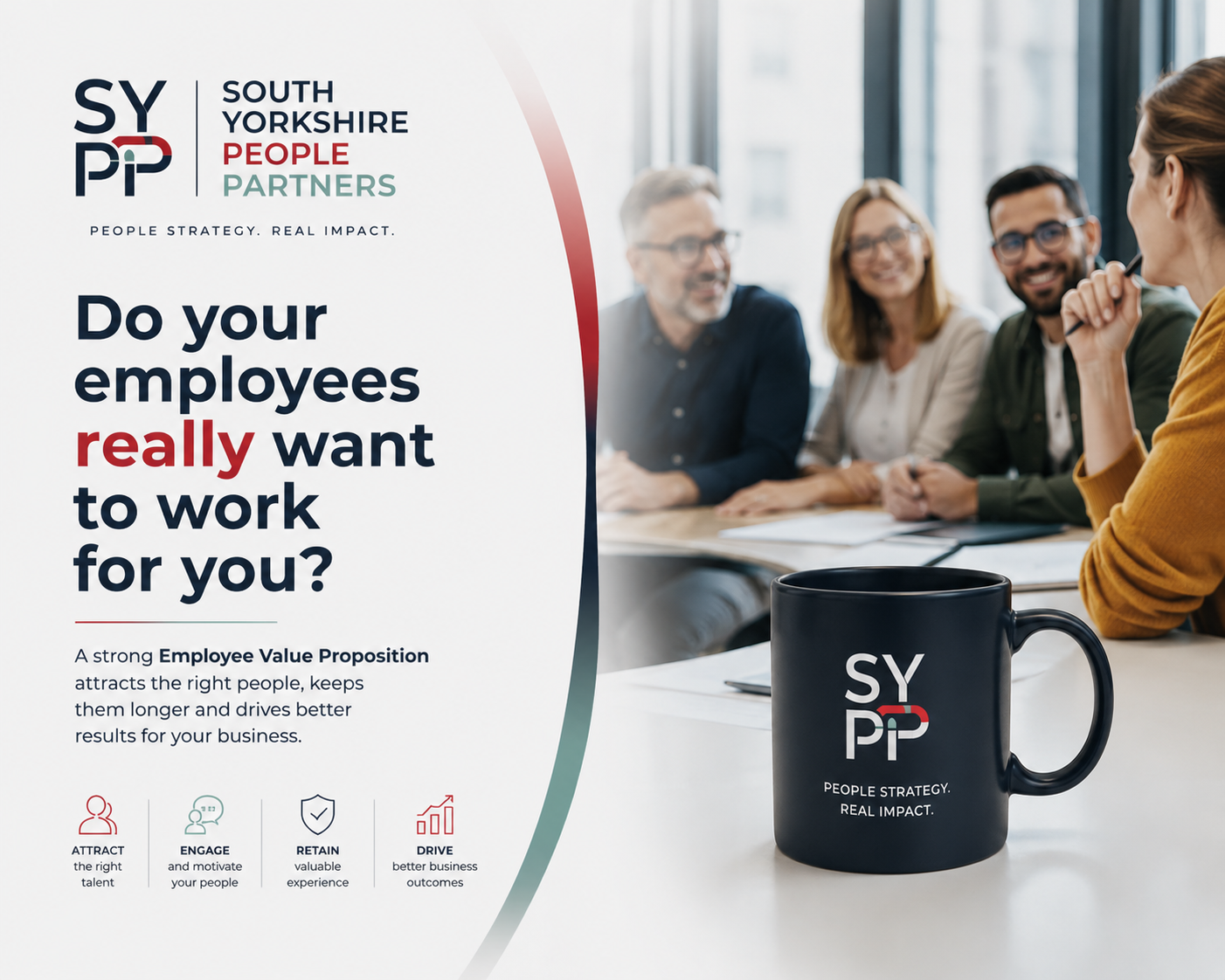
For many businesses, recruitment has become one of the biggest challenges they face. Whether you’re struggling to attract applicants, finding that new starters leave within months, or constantly replacing experienced staff, the costs soon begin to mount.
But perhaps the real question isn’t “Why can’t we recruit?” It’s “Why would someone want to work for us in the first place?”
Simply offering someone a job and paying them a salary isn’t enough anymore. Today’s employees have choices, and they’re increasingly looking for employers who offer more than just a payslip. They want meaningful work, supportive management, opportunities to develop, flexibility where possible, recognition for their efforts, and a workplace where they feel valued.
Businesses that understand this don’t just attract better people—they keep them.
The Real Cost of Staff Turnover
Replacing an employee is expensive.
Beyond recruitment advertising and agency fees, there are the hidden costs of interviewing, onboarding, induction, training, reduced productivity, management time and, often overlooked, the impact on customers.
Experienced employees know your products, understand your customers and solve problems quickly. New employees, however capable, need time to learn.
High staff turnover can lead to:
- Increased recruitment and training costs
- Reduced productivity
- Lower customer satisfaction
- Greater pressure on managers
- Loss of knowledge and experience
- Reduced morale amongst remaining employees
Conversely, organisations with stable, engaged teams often deliver a more consistent customer experience because employees understand the business, its values and how to get things done.
What Is an Employee Value Proposition?
You may have heard the term Employee Value Proposition (EVP). It sounds like another piece of corporate jargon, but the idea behind it is surprisingly simple.
An Employee Value Proposition is the answer to one question:
“Why would someone choose to join your business—and why would they choose to stay?”
Your EVP is everything your organisation offers employees in exchange for their skills and commitment.
That includes obvious things like pay and benefits, but also:
- Your culture
- Leadership style
- Career development opportunities
- Recognition
- Work-life balance
- Job security
- Wellbeing
- The sense of purpose employees get from working for you
Many businesses have an EVP whether they’ve consciously created one or not.
The important question is whether it’s the one you want.
Take a Look Around Your Business
If you asked every employee today:
“Why did you join us?”
Would the answers be consistent?
If you then asked:
“Why have you stayed?”
Would they still be positive?
Perhaps more importantly…
Do people actually stay?
If your workforce is constantly changing, it’s worth asking why.
Exit interviews can provide useful information, but by the time someone is leaving, it’s often too late.
Understanding what your current employees value is far more powerful.
One Size Doesn’t Fit All
A strong Employee Value Proposition doesn’t mean copying what large corporations do.
Every sector has different priorities.
Here in South Yorkshire, our economy is built on diverse industries including manufacturing, logistics, engineering, healthcare, social care, education and professional services.
What motivates someone working in a distribution warehouse may be very different from someone working in a university or residential care setting.
Likewise, the culture that helps a successful engineering business thrive is unlikely to be identical to that of a financial institution in London.
The best Employee Value Proposition is one that’s authentic to your organisation, reflects your values and genuinely connects with your people.
Your Reputation Starts Before Recruitment
Before applying for a job, many candidates now research employers in exactly the same way consumers research products.
Websites such as Glassdoor and Indeed allow current and former employees to leave reviews about their workplace. While individual comments should always be viewed in context, patterns quickly emerge. Repeated concerns about poor management, lack of progression, or an unhealthy culture can influence whether talented candidates decide to apply at all.
Research consistently shows that job seekers increasingly use employer review sites when evaluating opportunities, and a poor employer reputation can reduce both the number and quality of applications received. On the other hand, organisations with positive employee experiences often find recruitment easier because their existing employees become advocates for the business.
Your employer brand is no longer defined solely by your recruitment adverts or company website—it’s shaped by the experiences your employees choose to share.
Building a Workplace People Want to Be Part Of
Improving your Employee Value Proposition isn’t about introducing expensive perks.
Often, it’s about understanding what matters most to your workforce and making meaningful improvements.
Some practical steps include:
- Listening regularly through employee surveys and feedback
- Developing managers to become better leaders
- Creating clear opportunities for career development
- Recognising and rewarding good performance
- Communicating openly and consistently
- Supporting employee wellbeing
- Reviewing policies to ensure they reflect modern working practices
- Building a culture based on trust, respect and inclusion
Small, consistent improvements often have a far greater impact than occasional headline initiatives.
How South Yorkshire People Partners Can Help
At South Yorkshire People Partners (SYPPHR), we help organisations understand what it’s really like to work within their business—and what they can do to become an employer that people genuinely want to work for.
Our support includes:
- Independent organisational and people audits
- Employee satisfaction and engagement surveys
- Focus groups and workforce consultation
- Leadership and management development
- Practical HR advice
- Action planning to strengthen your Employee Value Proposition
We don’t believe in generic solutions. We work alongside businesses to understand their people, culture and objectives before providing practical recommendations that make a measurable difference.
Whether you’re struggling with recruitment, experiencing high staff turnover or simply want to become an employer of choice, we’d be happy to help.
After all, attracting talented people is only half the challenge.
Creating a workplace where they choose to stay is where the real value lies.