
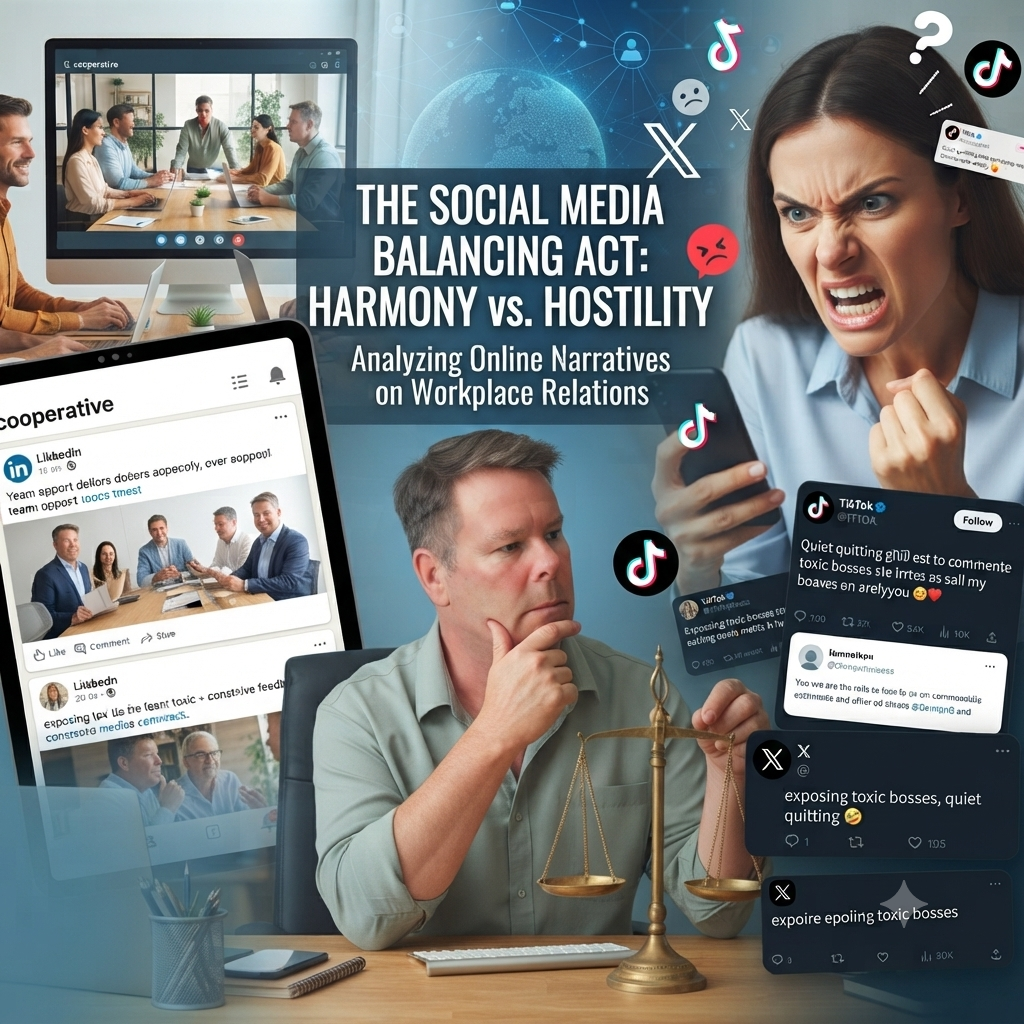
Social media acts as a magnifying glass for workplace dynamics, blurring the lines between personal expression and professional conduct. As employees increasingly turn to platforms like LinkedIn, X (formerly Twitter), and TikTok to discuss their employment experiences, a dichotomy has emerged in the advice circulating online.
The Spectrum of Online Workplace Advice
Online discourse generally falls into two competing camps: those advocating for cooperative alignment and those promoting an aggressive or adversarial stance toward employers.
1. The Cooperative Approach (Alignment)
Advocates for a harmonious workplace focus on professional boundaries, brand advocacy, and career longevity.
- Professional Branding: Many career influencers on platforms like LinkedIn advise employees to use social media as a tool for networking and industry thought leadership, which inherently requires maintaining a positive, professional image.
- Conflict Mitigation: Guidance often emphasizes “thinking before you post,” separating personal and professional accounts, and consulting with colleagues or supervisors before addressing sensitive workplace issues online.
- Constructive Engagement: This perspective views the employer-employee relationship as a partnership, suggesting that clear communication and alignment with company values lead to professional growth.
2. The Aggressive Approach (Adversarial)
Conversely, there is a significant volume of content that encourages employees to take a more confrontational or “militant” stance.
- “Quiet Quitting” and Beyond: Viral trends often celebrate employees who do the bare minimum, mock their employers, or publicly air grievances about management.
- Viral Exposure: These posts are designed to garner engagement through outrage. By highlighting perceived injustices, these creators often gain large followings, but at the cost of fostering an “us vs. them” mentality.
- Real-World Consequences: While this approach can provide a sense of catharsis or validation for frustrated workers, it frequently ignores the legal reality that public disparagement—even outside of work hours—can be grounds for termination or legal liability for creating a hostile environment.
Conclusion: Which Force Prevails?
While social media has the potential to facilitate professional connection and team bonding, the current landscape is more likely to promote a hostile environment rather than a harmonious one.
The reasons for this are rooted in the algorithmic nature of these platforms:
- Amplification of Conflict: Algorithms prioritize high-emotion, polarizing content. A nuanced post about resolving a workplace issue through dialogue rarely goes viral, whereas a post about “getting back at a toxic boss” is designed for maximum shares and comments.
- Permanence and Reach: Unlike private venting among friends, digital posts are “permanently and infinitely viewable.” This permanence means that a singular, aggressive moment of frustration can have long-lasting, damaging consequences for both the employee’s career and the organization’s culture.
- Erosion of Boundaries: As legal precedents like Okonowsky v. Garland demonstrate, the “outside of work” defense is failing. Because online actions now have direct, legally actionable consequences for the physical workplace, social media has become a primary vector for the expansion of toxicity from the private sphere into the professional one.
Ultimately, while the tools themselves are neutral, the social media ecosystem incentivizes adversarial behavior. Employees and employers alike are finding that the “digital footprint” is often the most significant contributor to a modern, sometimes hostile, workplace culture.
Do you believe that companies should implement more stringent social media policies for employees, or would that be an overreach into personal freedoms?